


Nintendo Music
4.83.85K Reviews
App Specs
- Version
- 1.7.1
- Updated On
- License
- Free
- Downloads
- 1,000,000+
- Developer
- Nintendo Co., Ltd.
- Categories
- Music & Audio
- Platform
- Android, iOS
Screenshots
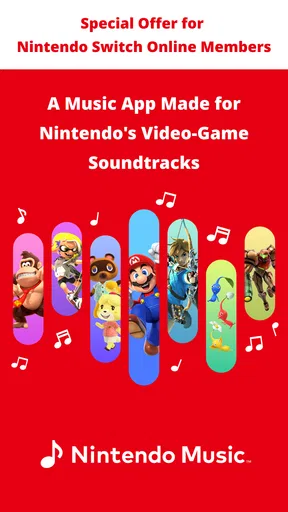
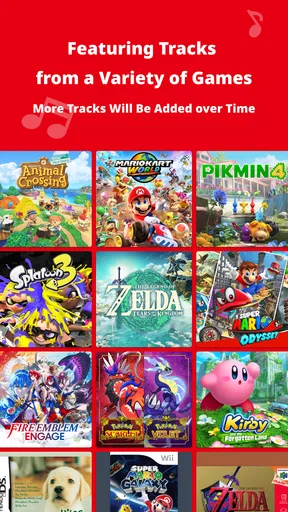
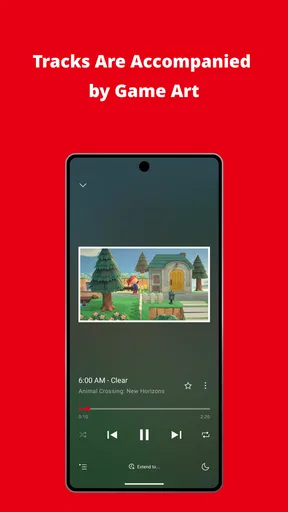
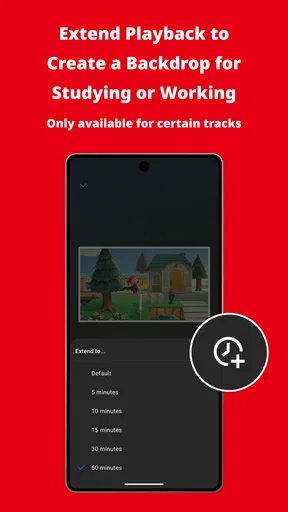
 Analysis by AppCompare
I’m always surprised by how quickly a game tune can bring back a place, a level, or a particular moment. That is the appeal of Nintendo Music: it gives Nintendo fans a dedicated way to revisit music tied to the games they remember, without needing to boot up a console. After the first burst of nostalgia, though, the question is whether it becomes part of an everyday listening routine or stays an occasional detour. My answer is that it earns a place most easily for listeners who already enjoy returning to Nintendo soundtracks, while its narrower focus makes it less convincing as someone’s only music app.
The first week: easy nostalgia, focused listening
My first instinct with a soundtrack app like this is to search for familiar themes, then follow that memory into music I had forgotten. That makes the opening experience especially rewarding: one recognizable melody can lead to a different game, a different mood, and a longer listening session than I planned. It works well for a commute, a quiet stretch of work, or a few minutes of browsing while deciding what to play next.
The best way to try it is not to treat it as a general-purpose radio station. I’d start with a game I know well, listen for a while, then move to a soundtrack from a title I have not revisited recently. That small change turns the app from a nostalgia button into a way to explore how varied Nintendo’s game music can be. If you are new to the catalog, familiar titles are a useful anchor; if you already know the classics, less-expected picks are more likely to keep the experience fresh.
For a practical everyday test, imagine opening the app on the way to work, choosing music that suits the mood rather than the game you last played, and letting it run without turning the trip into a search session. If that sounds appealing, the dedicated catalog has a clear purpose. If you mainly want whatever is popular across every genre, a broad streaming service is a more natural starting point.
How it holds up beyond the novelty
I find the lasting appeal of a soundtrack app depends less on how much I enjoy the first familiar song and more on whether it fits a routine I already have. I’d use this section to weigh that recurring value against the small amount of upkeep a personal listening habit can require, then consider what might make the catalog feel repetitive.
An Extensive Library
The app boasts an impressive collection of music from various Nintendo games. Whether you're a fan of the classic 8-bit beats from Super Mario Bros. or the epic orchestral scores from The Legend of Zelda, there's something here to tickle everyone's fancy. I found myself diving into the playlists, rediscovering forgotten gems, and even discovering tracks I hadn't heard before.
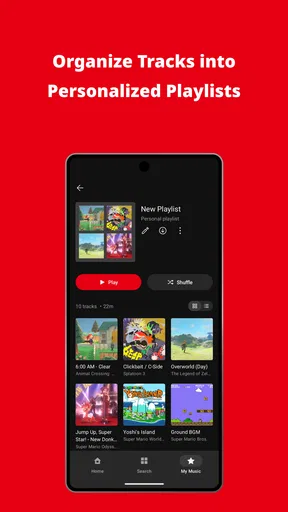
One of the coolest features is the ability to create personalized playlists. You can mix and match tracks from different games, crafting your ultimate Nintendo soundtrack. It’s like being a DJ, but with a nostalgic twist!
Worth Reading Before You Choose

EA SPORTS FC Mobile 26 Is a Bigger Football Game, but It Takes Time

Flipboard Shows What News Apps Must Do Beyond the Feed

Switching to Android Auto Means Rethinking Your Driving Routine

Google Calendar Makes a Crowded Week Easier to Manage

Ludo King Makes the Most of the Minutes Between Plans

Baby Panda World Brings Quick Play to Modern Phones, but Its Game Library Feels Busy
When the catalog becomes a habit
That playlist idea is also where I see the strongest month-to-month value. A soundtrack collection can be fun to browse once, but a playlist organized around a real listening situation is more likely to get used again. I would make one for a short walk, another for background listening, and perhaps one that moves between familiar and unfamiliar game music. The useful trick is to build around a mood or routine, not only around favorite titles; otherwise, a playlist can become a greatest-hits loop that wears thin.
Nintendo Music is a music and audio app from Nintendo Co., Ltd. It is free, has an Everyone age rating, and is available on Android and iOS. Its 4.7 average comes from around 37,000 ratings, while over a million installs suggest that the idea has reached well beyond a tiny group of collectors. I would still judge its lasting value by how often I reach for its particular catalog, rather than by popularity: a high rating cannot make a focused library suit every listener.
Sound Quality and Features
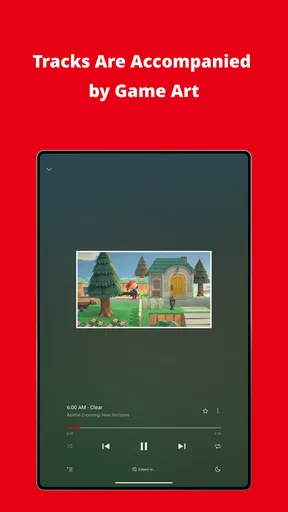
Sound quality is top-notch. The tracks are crisp and clear, capturing the essence of the original recordings. For those of you who are audiophiles, you’ll appreciate the attention to detail. The app also offers offline playback, which is a lifesaver for those moments when you’re out of Wi-Fi range but still need your Mario fix.
Offline listening has a practical advantage beyond avoiding a weak connection: it lets you decide before leaving what music will be available when you are away from a reliable network. I would prepare a small selection for a flight, a commute, or a place where reception is inconsistent, then check that the tracks are ready before heading out. That is a better workflow than waiting until you are already offline and hoping to solve a listening problem at the last minute. It is also a reminder that the app’s value depends partly on planning, not just pressing play.
Another feature worth mentioning is the app’s ability to integrate with social media. You can share your favorite tracks or playlists with friends, spreading the Nintendo love across your social networks. Plus, there's a community tab where you can connect with other fans, share your thoughts, and even find new tracks to enjoy.
Maintenance without making it a chore
A music app only becomes part of my routine if it does not demand constant housekeeping. Here, I would keep maintenance simple: make a few playlists that have a clear purpose, remove tracks when a mix stops matching that purpose, and occasionally browse for something different when the familiar choices begin to blur together. The app is best treated as a curated side library, not a project that needs daily organizing.
Its current version is 1.6.0, and it was released on October 7, 2024. Those details matter less than the listening habit itself, but they give a useful snapshot of a relatively recent app whose catalog and experience can develop over time. I would not install it expecting an endless stream of new discoveries every time I open it. Instead, I would return when I want Nintendo music specifically, and let any new material be a bonus rather than the sole reason to keep it.
How it compares with ordinary music apps
The key trade-off is focus. A mainstream streaming service is usually better when I want broad genre coverage, a huge range of artists, or one place for music from every part of my life. Nintendo Music makes more sense when I want game soundtracks in one dedicated space and enjoy the associations attached to them. These uses can coexist: I might rely on a general service for daily variety and open this one when I want a Nintendo-centered session.
That distinction also helps answer who should skip it. If you rarely listen to game music, do not care about Nintendo titles, or want a single app to cover every musical mood, its specialized scope may feel limiting after the initial browse. On the other hand, longtime fans, people who use soundtrack music while studying or relaxing, and listeners who enjoy revisiting familiar game worlds are more likely to find a reason to return. It is a companion to a broader library, not an automatic replacement for one.
Sources of fatigue and small trade-offs
The same familiarity that makes these tracks comforting can also make them repetitive. If I keep replaying only the themes I already know, the app risks becoming a brief nostalgia stop rather than a lasting habit. Mixing well-known selections with music from games I have not explored is a simple way to reduce that fatigue. I would also avoid using one playlist for every situation: music that feels right for focused work may not be what I want on a lively walk.
There is a modest discovery trade-off, too. A collection centered on one company’s game music is inherently narrower than a general music catalog, so the pleasure comes from depth within that world rather than constant variety across genres and artists. For someone who wants background sound without thinking about where it comes from, a broad service may be easier. For someone who enjoys recognizing how a melody connects to a game, that focus is the point.
Before relying on it for a particular trip or routine, I would also test the parts of the experience I expect to use most: find a few tracks, make a playlist, and prepare offline listening in advance if needed. That small trial answers the practical question of whether the app fits my habits better than a long browse does. It avoids building a routine around a feature I may rarely use, and helps me see whether the catalog is broad enough for my own favorites.
Fun and User-Friendly
From a usability standpoint, the app is a dream. It’s intuitive, and each feature is just a tap away. I never found myself getting lost or confused, which is a big plus in my book. Even the most tech-challenged among us will find it easy to navigate.
That straightforward feel matters most when I am using the app casually. If I have only a few minutes, I want to reach something familiar without turning the session into a hunt through menus. At the same time, a smooth interface cannot solve every mismatch: a clean design does not make a focused soundtrack catalog broad, nor does it guarantee that every listener will find enough variety for hours of daily playback. Ease of use helps the right audience settle in; it does not change who that audience is.
There are also regular updates, ensuring that the library stays fresh and packed with all your favorite tunes. I love that they’re consistently adding new content, keeping the experience dynamic and exciting.
Who gets the most from it
I would recommend trying it if Nintendo music already has a place in your life, whether you want a soundtrack for a familiar routine or simply enjoy hearing game compositions away from the screen. It is especially appealing when a specific score is tied to a memory and you want to revisit that feeling without restarting the game. It can also be a pleasant way to introduce someone to the music itself, even if they are not sitting down to play.
For parents or shared-device households, the Everyone rating is reassuring as a basic age classification, though I would still choose listening that suits the person using the device. For anyone deciding whether to install it, the sensible test is straightforward: use it for a few different listening occasions, not just one nostalgic session. If you find yourself returning to it because you want this particular music, it has earned its space. If you keep leaving it for a broader streaming app, that is a useful answer too.
Wrapping It Up
After spending some quality time with Nintendo Music, I can confidently say it’s a must-have for any Nintendo fan. It’s more than just an app; it’s a nostalgic journey through the soundscapes of gaming history. Whether you’re looking to relive childhood memories or discover new tracks, this app has it all.
So, if you’re ready to take a musical trip down memory lane, I’d highly recommend giving Nintendo Music a spin. Just plug in your headphones, press play, and let the magic of Nintendo’s musical universe whisk you away.
My long-term verdict is a little more selective: I would keep it if those soundtracks are music I genuinely want to hear, rather than because I feel obliged to collect another app. The strongest case for it is repeated, specific use—turning to Nintendo music for a walk, a quiet work session, or a familiar soundtrack break. If that pattern develops, its focused identity is a strength. If novelty fades and I stop opening it, a broad music service may simply suit my everyday listening better.
Pros
- Wide selection of iconic Nintendo tracks.
- High-quality audio for immersive listening.
- User-friendly interface for easy navigation.
- Offline listening mode available.
- Regular updates with new tracks included.
Cons
- Limited to Nintendo's music library.
- No option for creating custom playlists.
- Requires a subscription for full access.
- Ads can be intrusive in the free version.
- Not available in all regions yet.
FAQs for Nintendo Music
What is Nintendo Music and what can I do with it?
Nintendo Music is an app designed for music enthusiasts who love Nintendo's iconic soundtracks. With this app, users can stream and enjoy a vast library of music from various Nintendo games. It allows fans to explore playlists, create their own, and find new favorites from classic titles to modern hits.
Is Nintendo Music available on both Android and iOS devices?
Yes, Nintendo Music is available for download on both Android and iOS platforms. You can find it on the Google Play Store and the Apple App Store, making it accessible for a wide range of devices. Ensure your device meets the minimum requirements for the best experience.
Does Nintendo Music offer offline listening options?
Nintendo Music provides an offline listening feature for premium subscribers. This allows users to download their favorite tracks and playlists to enjoy without an internet connection. It’s a great option for on-the-go listening or when you’re in areas with limited connectivity.
Are there any subscription fees associated with Nintendo Music?
Nintendo Music offers a free version with ads and limited features. For an ad-free experience and additional benefits like offline downloads, users can subscribe to a premium plan. The subscription fees are competitive and provide access to exclusive content and updates.
How frequently is new content added to Nintendo Music?
Nintendo Music regularly updates its library with new tracks and playlists. The app aims to include music from recent game releases alongside classic soundtracks. Users can expect fresh content on a monthly basis, keeping the experience engaging and up-to-date.


